

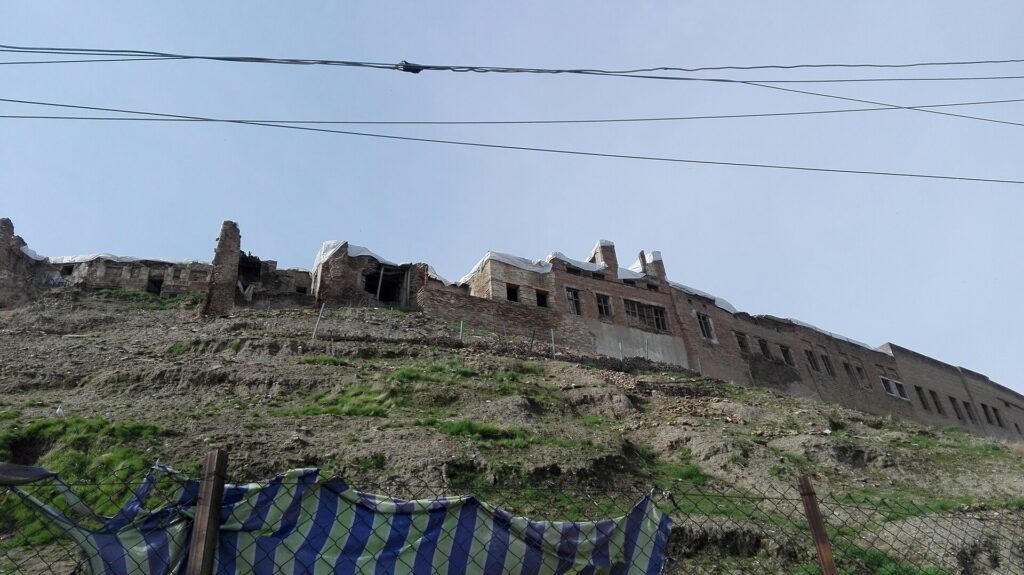
Photograph: JEHAN SHERKO, CC BY-SA 4.0
In the spring of 1991, millions of Kurds fled toward the mountains of northern Iraq and the borders of Turkey and Iran. The Iraqi army had crushed an uprising that followed the Gulf War, and the roads were packed with families leaving everything behind. The scenes, broadcast around the world, prompted a rare international response. Within weeks, the United States, the United Kingdom and France established a no-fly zone over Iraqi Kurdistan, the Kurdish no-fly zone that would eventually make possible something few had ever seen: an elected Kurdish parliament on Kurdish soil.
How the zone came about
The no-fly zone, sometimes called Operation Provide Comfort and later Operation Northern Watch, barred Iraqi government aircraft from flying north of the 36th parallel. It did not mean the region was peaceful or fully protected. Ground forces were a different matter, and the early years of the 1990s were deeply uncertain. But the zone did mean that Baghdad could no longer project air power over the Kurdish north, and that created a practical, if fragile, space for something new to grow.
Iraqi forces withdrew from much of the region in late 1991, and the Kurdish political parties, principally the Kurdistan Democratic Party (KDP), led by Masoud Barzani, and the Patriotic Union of Kurdistan (PUK), led by Jalal Talabani, found themselves administering territory rather than fighting purely for survival. The question of what to do with that territory became urgent.

The election of 1992
In May 1992, the Kurdistan Region held its first free parliamentary election. People in Hewler (Erbil), Silêmanî (Sulaymaniyah), Duhok and the surrounding districts went to the polls to choose representatives for a new Kurdistan National Assembly. The turnout was high, and by many accounts the atmosphere was one of disbelief and celebration in equal measure. For most voters, nothing like this had ever happened in their lifetimes.
The result was almost perfectly split between the KDP and the PUK, close enough that the two parties agreed to divide seats equally and share power. It was an imperfect arrangement, and the tensions it papered over would eventually lead to a devastating inter-Kurdish conflict later in the decade. But the election itself was a genuine moment. A Kurdish legislature, chosen by Kurdish voters, met in Hewler. Debates were conducted in Sorani Kurdish. Laws were passed. Whatever the region’s political difficulties, the institution existed.
What the parliament represented
For Kurds in Iraq and in the diaspora, the 1992 parliament carried a meaning that went beyond the mechanics of government. Kurds had long been told, in Turkey, in Iran, in Syria and in Iraq, that their language was not a language of administration, that their identity was a regional variation rather than a national one. A functioning parliament, conducting its business in Kurdish, answered that claim in the plainest possible way.
It also created structures that would outlast the turbulence of the 1990s. Despite the inter-Kurdish fighting that divided the region into two separate administrations for several years, the idea of elected Kurdish self-governance survived. When the two parties reconciled in 1998 and especially after the fall of Saddam Hussein’s government in 2003, those structures became the foundation of what is now the Kurdistan Regional Government, a recognised federal entity within Iraq.
A moment still worth knowing
The no-fly zone was always a product of international politics rather than a principled commitment to Kurdish rights, and many Kurds are clear-eyed about that. What matters is what was built within the space it created. An election, a parliament, a language given official life, and a generation that grew up knowing those things had existed. That memory shaped everything that came after.
At Kurdistan.fm, we are always interested in hearing how these events live on in family stories and community memories across the diaspora. If you have a connection to this period, we would love to hear from you.