

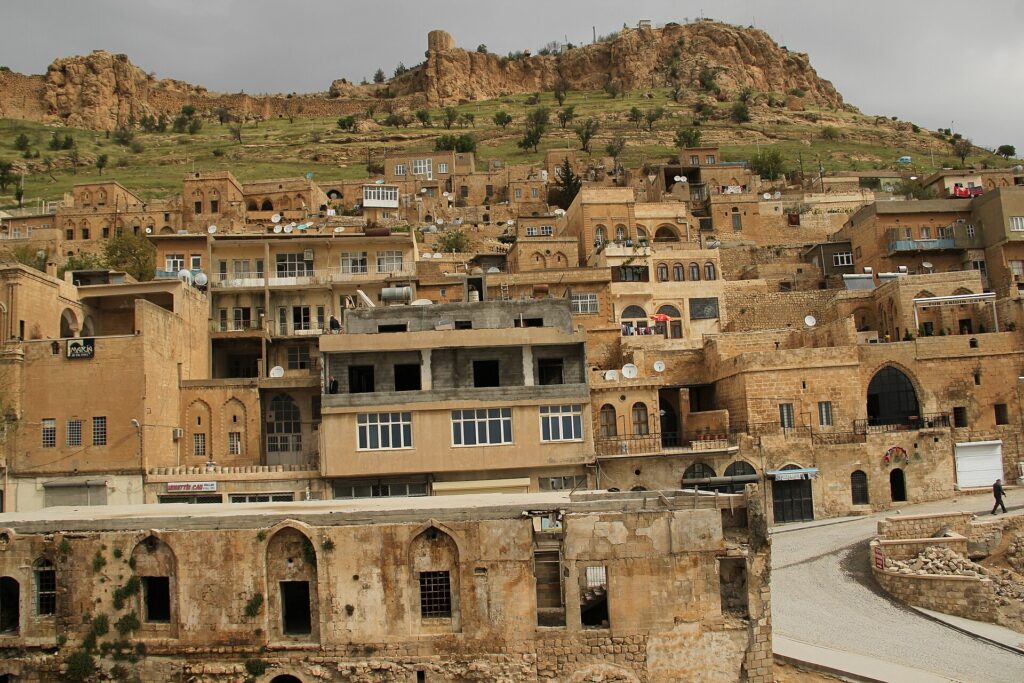
Mêrdîn (Mardin) climbs a single hill on the southern edge of the Kurdish highlands, and from its terraces the Mesopotamian plain stretches south into Syria like a sea. The old town is built of pale limestone that turns gold in the evening, house stacked on house, with the great Zinciriye Madrasa and the Ulu Camii minaret rising above the alleys.
A city of many peoples
Kurds are the majority today, but Mêrdîn has always been mixed. The Syriac Christians who gave the town its ancient name still worship at the Kırklar church, and the monastery of Deyrulzafaran, five kilometres out, was the seat of the Syriac Orthodox patriarch for six centuries. Arabic is spoken in the bazaar, Kurmanji in the villages, and the copperware, silver filigree and almond sweets sold in the covered market are traded in all three languages.
What to see
Walk the Birinci Cadde, the main street of the old town, at sunset; climb to the Kasımiye Madrasa for the view; and take the road east to Dara, a ruined Byzantine frontier city with rock-cut cisterns the size of cathedrals. The Midyat district further east is the heart of Tur Abdin, with dozens of Syriac villages and churches.

On the radio
Mêrdîn’s mixed heritage runs through its music: listen for the Arabic-inflected Kurdish songs of the region, and for singers like Mem Ararat, whose Kurmanji ballads have made him one of Bakûr’s most listened-to voices.