

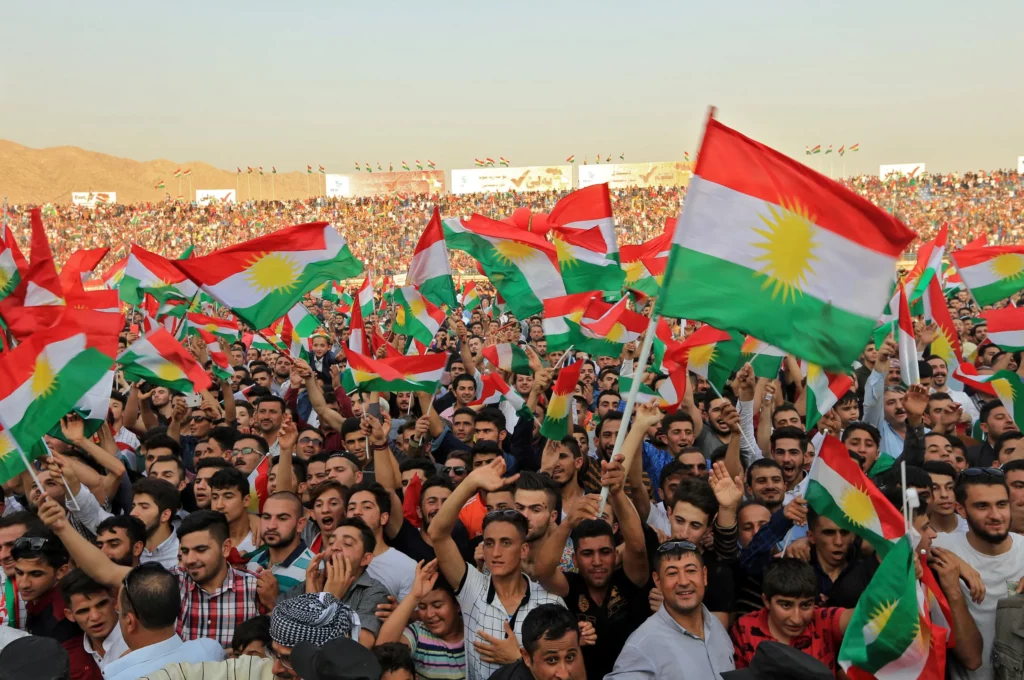
Photograph: JEHAN SHERKO, CC BY-SA 4.0
On 25 September 2017, voters across the Kurdistan Region of Iraq took part in the 2017 Kurdish independence referendum, one of the most significant political events in modern Kurdish history. People queued at polling stations across Hewlêr (Erbil), Silêmanî (Sulaymaniyah), Duhok and the disputed territories including Kirkuk (Kerkûk). The result was an overwhelming yes. More than ninety percent of those who voted chose independence. And then, within weeks, everything changed.
The road to the vote
The Kurdistan Regional Government, known as the KRG, had long held a degree of self-rule within Iraq, a status formally recognised in Iraq’s 2005 constitution. But for many Kurds, autonomy was never the final destination. The idea of a referendum had circulated for years, and the KRG’s president at the time, Masoud Barzani, pushed it forward through 2017 despite fierce opposition from Baghdad, neighbouring governments and Western powers alike.
The timing was rooted partly in confidence. Kurdish Peshmerga forces, the KRG’s military, had played a central role in the fight against the Islamic State group from 2014 onwards, and in doing so had taken control of disputed areas including the oil-rich city of Kirkuk. Kurdish leaders argued the moment was right. Critics, including the United Nations and most Western governments, urged delay, warning that the region was too unstable for such a move. The KRG pressed ahead anyway.

The referendum was extended beyond the established three KRG governorates to include the disputed territories, a decision that deepened the controversy. Many Kirkuki Turkmens and Arabs boycotted the vote, and the Iraqi government in Baghdad declared the referendum unconstitutional.
What happened on the day
The atmosphere at polling stations was, by many accounts, emotional. Older Kurds who had lived through the Anfal campaign, the fall of the Republic of Mahabad and decades of suppression cast votes they had never expected to cast. Photographs circulated widely of elderly men and women weeping as they held ballot papers. Kurdish flags flew from buildings and cars. In Silêmanî, Hewlêr and towns across the region, the day felt, to many participants, like a historical threshold.
The official turnout was high, and the result was not in doubt: an overwhelming majority voted yes. But the vote itself was not internationally recognised. No country, including those most sympathetic to Kurdish political aspirations, chose to accept the result as a basis for independence.
The aftermath
The consequences came swiftly. Iraq, supported by Iran and Turkey, moved to apply pressure on the KRG immediately after the result was announced. Within weeks, Iraqi federal forces and allied militias moved into Kirkuk, and Peshmerga units withdrew from positions they had held since 2014. Kirkuk returned to federal Iraqi control without a significant military confrontation, though the speed of the withdrawal shocked many Kurds. The disputed territories were effectively lost.
Economically, the KRG faced pressure from multiple directions. Baghdad restricted access to international flights through Hewlêr and Silêmanî airports for a period. The KRG was already facing serious financial difficulties, and the post-referendum situation added to those strains considerably.
Masoud Barzani stepped back from the presidency of the KRG in the weeks that followed, though he remained a prominent political figure. Negotiations between Erbil and Baghdad continued for years afterwards, covering budget disputes, oil revenues and the status of the disputed territories, none of them fully resolved.
What the referendum meant
Whatever its political outcome, the referendum registered something real: the collective desire of a very large number of people to determine their own future. For the Kurdish diaspora watching from Europe, North America and Australia, it was a moment of intense solidarity, pride and, eventually, grief at what followed. The day is remembered differently by different people, some as a moment of courage, others as a strategic miscalculation, and many as both at once.
The events of 2017 remain a live subject in Kurdish political life. They are discussed, argued over and mourned at dinner tables from Hewlêr to Stockholm. At Kurdistan.fm, we know our listeners carry these memories with them. If you were there, or watched from abroad, we would love to hear what that day meant to you.