

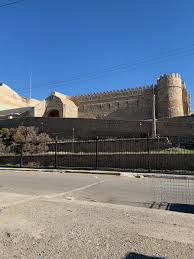
Kirkuk’s citadel sits on a low artificial mound that human hands have been raising, layer by layer, for at least five or six thousand years. The mound, known in archaeology as a tell, holds within it the compressed remains of dozens of successive settlements. Below the current foundations lie Assyrian, Babylonian and even older traces. The city spread out beneath it today is one of the most contested places in the Kurdish world, and the citadel is its oldest witness.
A city that belongs to everyone and no one
Kirkuk (known in Kurdish as Kerkûk) sits at the edge of the Kurdish region in northern Iraq, close to where the plains of Arab Iraq begin to give way to Kurdish foothills. Its population has long been mixed. Kurds, Arabs, Turkmen and Assyrian Christians have all called it home, in different proportions at different times in history. That diversity has made the city genuinely plural in its culture, its languages and its architecture. It has also made it a place that multiple communities claim, and that no single political settlement has yet been able to resolve to everyone’s satisfaction.
The question of whether Kirkuk should be administered as part of the Kurdistan Region of Iraq or remain under the authority of the central government in Baghdad has been one of the most persistent disputes in Iraqi politics for decades. A referendum mechanism intended to settle the issue was written into the Iraqi constitution of 2005 but was never carried out. The city has passed between different administrations more than once in recent memory. Most people who live there simply get on with their lives between those political shifts, as they always have.

What the citadel holds
The citadel mound itself is not a single building or monument. It is an elevated neighbourhood, enclosed and raised above the surrounding streets, where families lived in old stone and mud-brick houses well into the twentieth century. Many of those houses fell into disrepair or were demolished over the years, and large parts of the interior of the citadel are now empty ground. A Chaldean church, a mosque and the remnants of older structures still stand within the walls.
Beneath the surface, excavations over the decades have uncovered objects linking the site to ancient Mesopotamian civilisations. The area around Kirkuk corresponds roughly to the ancient region of Arrapha, a city-state that appears in cuneiform records going back more than three thousand years. Some scholars connect it even earlier to the Hurrian people, who left a remarkable archive of clay tablets at a nearby site called Nuzi, offering a detailed picture of Bronze Age society in this part of the world.
The citadel has also played a role in more recent history. During the Arabisation policies pursued by successive Iraqi governments in the second half of the twentieth century, tens of thousands of Kurds and Turkmen were displaced from Kirkuk and its surrounding villages and replaced with Arab families brought from the south. Homes and land records were altered. After 2003, many displaced families returned, creating new layers of competing claims on property and neighbourhood. The citadel watched all of it from its mound.
The city’s everyday life
Away from the political argument, Kirkuk has a texture that is worth knowing. The old bazaar below the citadel, the smell of tea houses, the mix of languages heard in a single street, the Turkmen music that plays alongside Kurdish songs in the same neighbourhood: these things are real and they continue. Kirkuk’s Turkmen community has produced poets and musicians of their own, and the city’s Assyrian population maintains churches that have stood for centuries.
Kurdish culture in Kirkuk is deep-rooted. The city appears in Kurdish folk songs, in the memories of displaced families who settled in Sulaymaniyah (Silêmanî) or Erbil (Hewlêr) and in the rhetoric of politicians on all sides. For many Kurds, Kerkûk carries a weight that goes beyond administration or oil fields. It is a place where Kurdish presence has been documented for centuries and where that presence was violently disrupted within living memory.
The citadel does not resolve any of that. But it does put it in proportion. Civilisations rose and fell on that mound long before any of the current disputes existed, and the city continued after each of them. That is not a comfortable thought, perhaps, but it is an honest one.
If Kerkûk is part of your family story, or if you have memories of the citadel and the streets below it, we would love to hear from you on Kurdistan.fm. The history of a place is always richer when the people who lived it speak for themselves.